15 Years of Writing

I read, and sometimes feel that I read too much. I also write, and always feel like I don't write enough. This seems to be a recurring theme for me, along with many others, who continue to read this old blog post The Dangerous Effects of Reading. At this point more people have read that than I could ever meet: over half a million. Consumption vs. creation is a theme of our times, and the idea that creation is somehow good for you universally, while consumption is good for you at times, seems to have some weight.
I try to write everyday, failing about half of the days. I write morning pages which is basically whatever is on your mind without a clear purpose, like a child's diary. Once you complete the pages (3 pages or 750 words), you tend to keep going and put some structure in, or something you are thinking about comes out and turns into something else.
I write privately in a github repository, and if 750 words is the daily goal, that means I write about 10 pages a week. A strict morning pages person would write 21 pages a week, and real writers consider 750 a warmup.
My template looks like this:
# {{yyy-mm-dd}}

### Gratitude

I am grateful for:

1.
2.
3.

I am ___

***

{content}


[[daily-writing-root-{{year}}]]
I use Foam, which is sort of an early Obsidian-like format that allows for linking between writing. I don't use complex tools for things like this, because it violates one of my core personal archive rules:
plain text, in dropbox and/or github, for everything
I've written in Google Docs, Word, Scrivener - all of them - and found that I lose them. Plain text is not lost, is easier to search, no vendor lock-in.
Foam's primary purpose is to give the writing just enough organization that I don't feel too much entropy and want to change tools every few months, while at the same time allowing me to write from many places - iPad, laptop, even phone. Plain text can be written anywhere and then posted to github later if needed, although I try to avoid it.
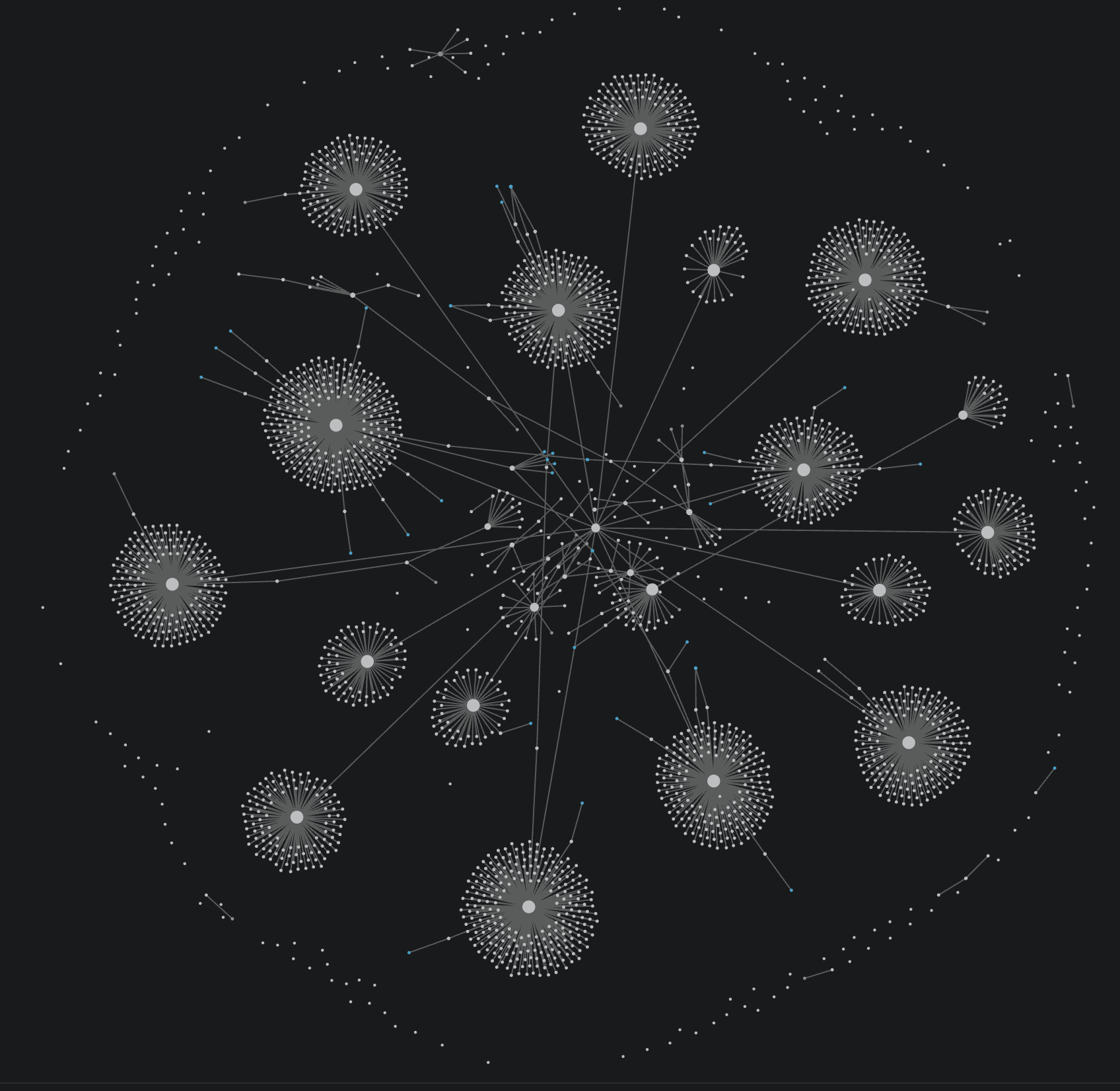
Foam also allows me to map the graph of all the links, which ends up looking like this:
Today is part of the 2026 writing cluster:
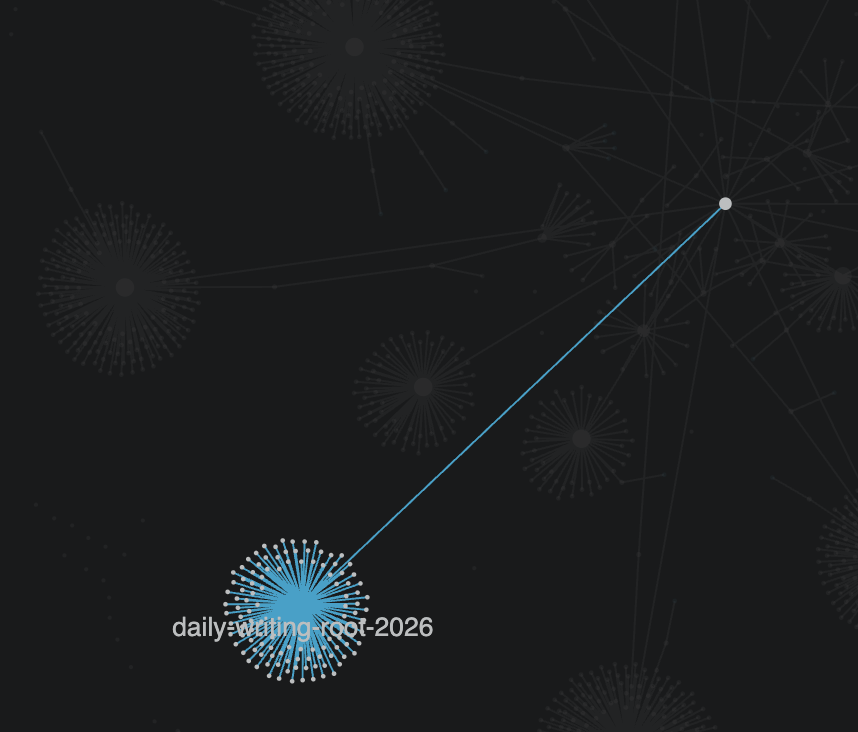
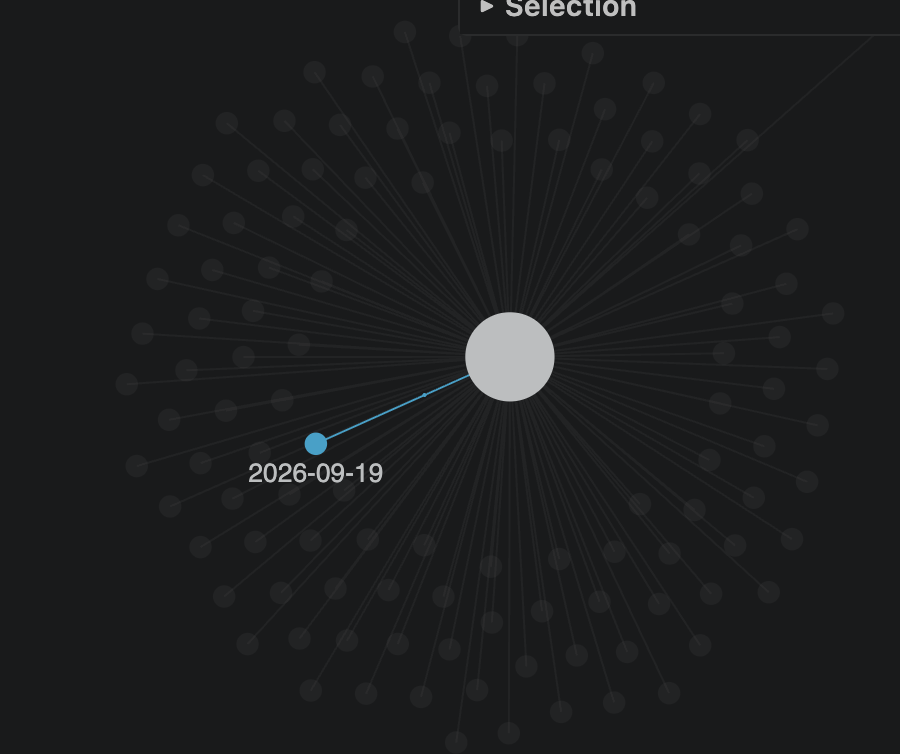
There are other clusters for books that I've written, paid blog posts, and many abandoned projects. Many of these are the one-off unlinked dots on the outside.
Why do I think this is valuable, and that I don't do enough of it?
Writing allows me to figure out what I think or feel about a topic. There is some part of forming the words that feels like a release, like you had something inside you that was unorganized, and now you straightened it up a bit. Other times I'm just pasting links or poetry that I like, a consumption journal basically. There are times where what I write is the only place in which I express a feeling or thought. Not every thought has to be public, even if social media wants us to post it. Sometimes I have a thought that bounces around for a few days, until I write it down, which creates space for another one.
It also serves as a personal history. Let's say I am thinking of moving or changing jobs - I have some entries on the last times I did; those memories can be brought forward. I wrote in 2020 about my Dad dying, the family moving, losing a job when the company ran out of money, a serious mental health issue in my family, a serious physical health issue in my family, and dealing like others did with a pandemic. I can read my complaining about it in a few short sentences a day, and that's useful to me. After all, we survived.
My writing has no real purpose long-term for this reason - I have no plans to have my writing persist if I were to pass away, for example. It would just die with me. And this is fine, it is only useful while my brain is active, to serve as a habit and tool of thought. My only hope for the future is that I continue.
